Every morning and evening, the bathroom is where your day begins and ends, so this "small" room deserves big design attention. Whether you are planning a bathroom remodel for your main bathroom or simply refreshing a guest bathroom, bathroom tile often sets the tone for the entire interior. It controls how bright the space feel larger, how safe it is underfoot, and how easy it is to maintain. Today, tile selection is no longer just about covering bathroom walls; it's about curating a stylish bathroom experience that is both functional and beautiful bathroom worthy.
If you're collecting bathroom design ideas and feel stuck on choices, use this guide as your shortcut to smarter decisions. We'll explore materials that add warmth and natural light while ensuring you achieve that perfect bathroom feel.
1. Glazed Tiles
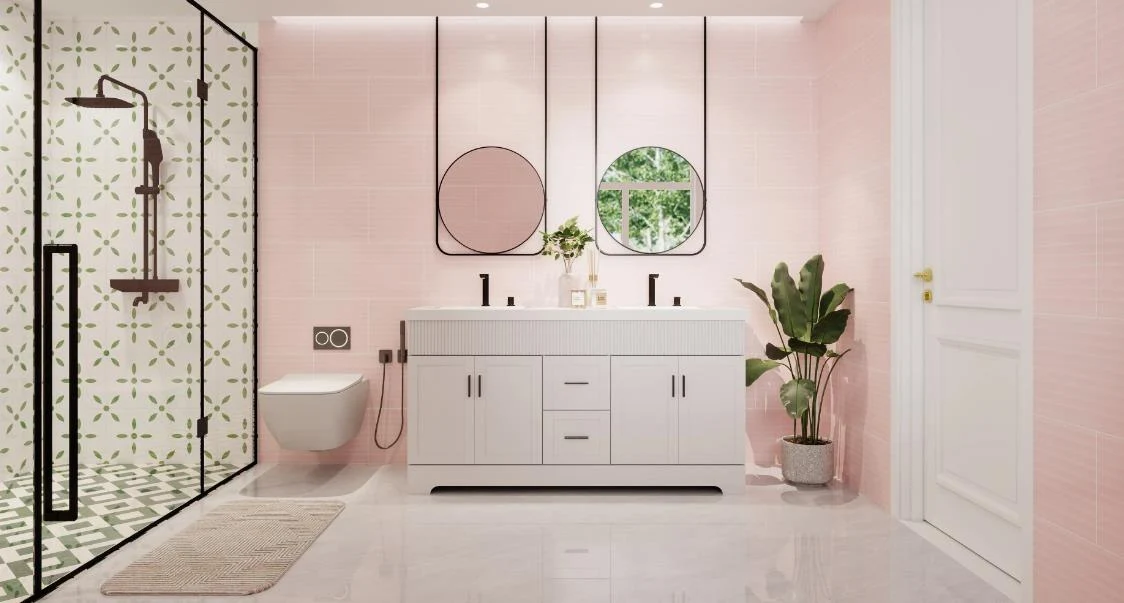
Glazed tiles are finished with a glass-like coating, making them rich in color, highly stain-resistant, and easy to wipe down. They are a strong choice for a modern bathroom and decorative accent wall areas. For floors, ensure you select a high slip-resistance rating, especially in the shower area.
2. Matt Tiles
The surface of a matte tile offers soft texture and a natural, restrained bathroom design style. It pairs beautifully with natural materials and is ideal for low-key elegance, often seen in Scandinavian interiors (a nod to Nordic simplicity). With better slip resistance than glossy finishes, it is perfect for bathroom floor tiles design.
3. Polished Tiles
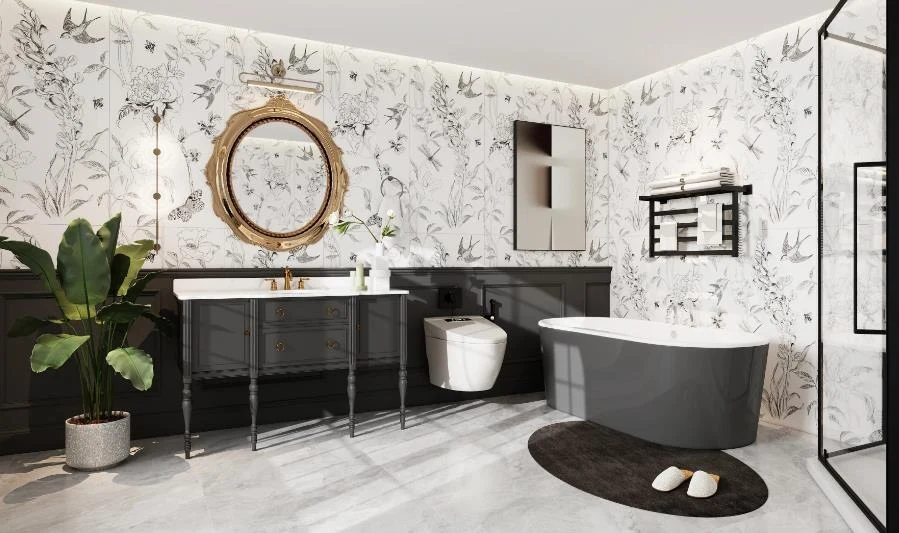
Polished tiles feature high gloss and strong transparency, making them a go-to for bathroom walls in dry areas to create an airy, bright sense of volume. However, traction can be a concern in wet zones; if using these in a family bathroom, balance the shine with a well-placed bath mat.
4. Antique Tiles
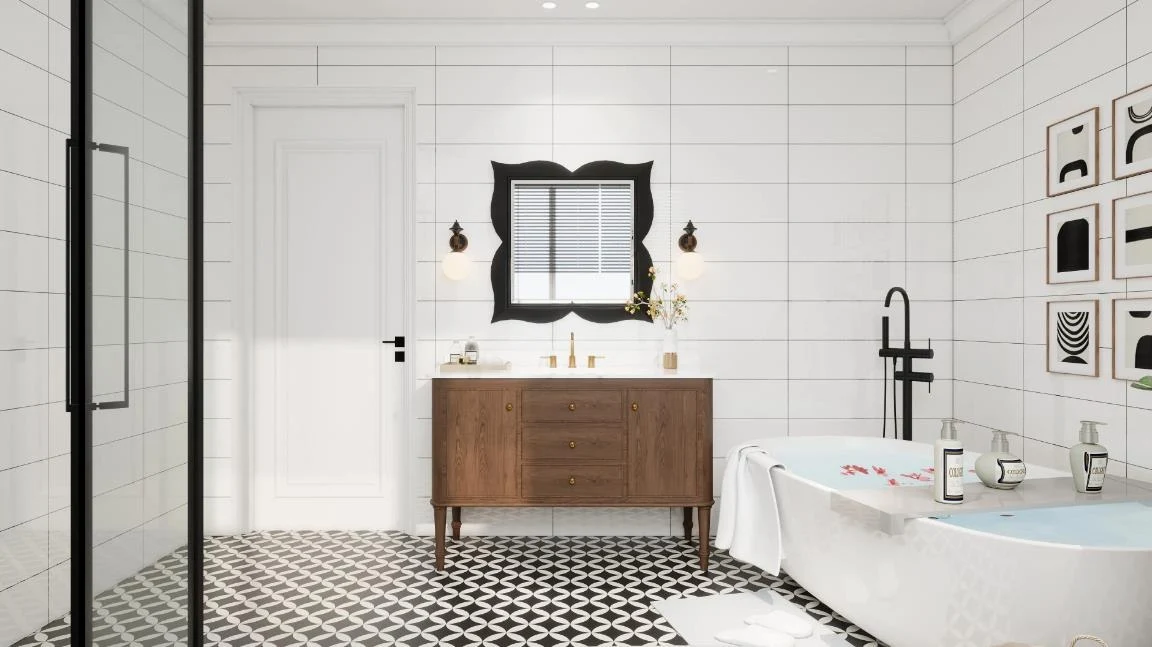
Antique tiles imitate natural wood, stone, or cement textures through surface processing, presenting a warm, rustic look. The color tone is warm, suitable for creating a retro, industrial or Mediterranean style bathroom. Their matte black or earthy variations are durable and non-slip.
5. Mosaic Tiles
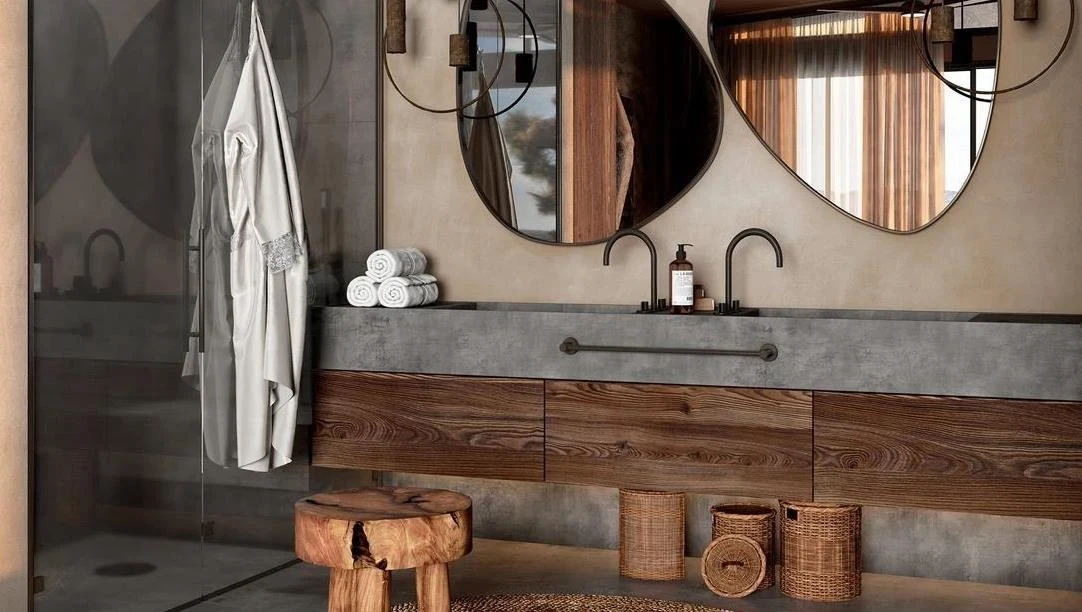
Composed of small pieces, mosaics offer unparalleled decorative potential. It can be used for local embellishment, background wall, floor puzzle, and even to create the periphery of the bathtub or shower area. It is suitable for spaces that like details and artistic sense, but the paving process requires high requirements.
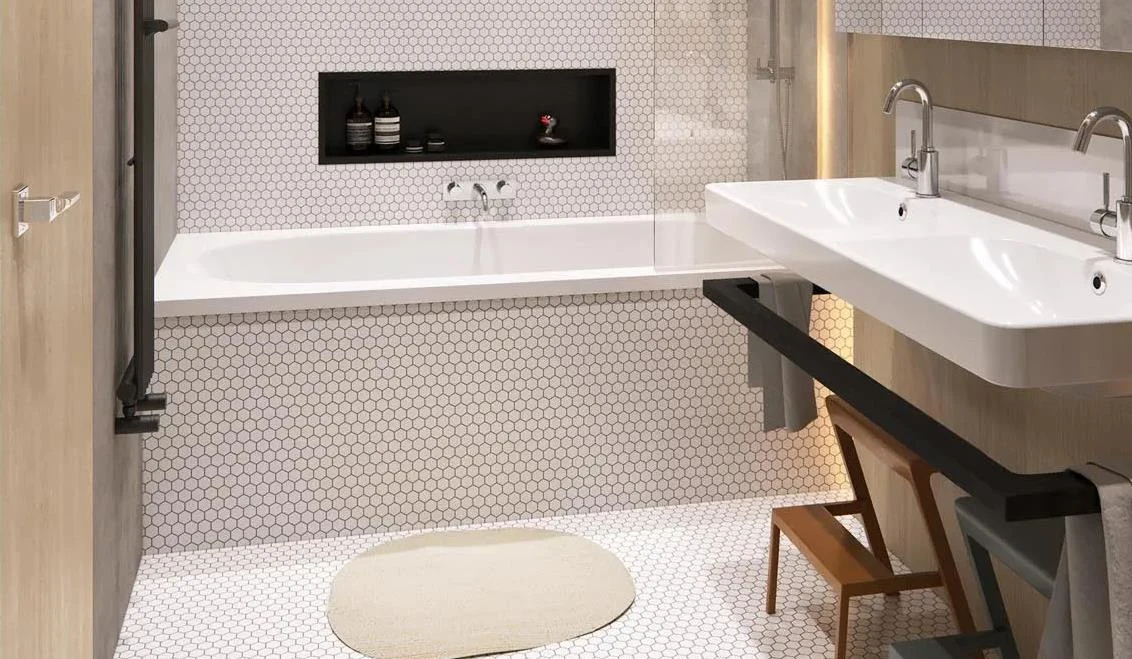
6. Hexagonal Tiles
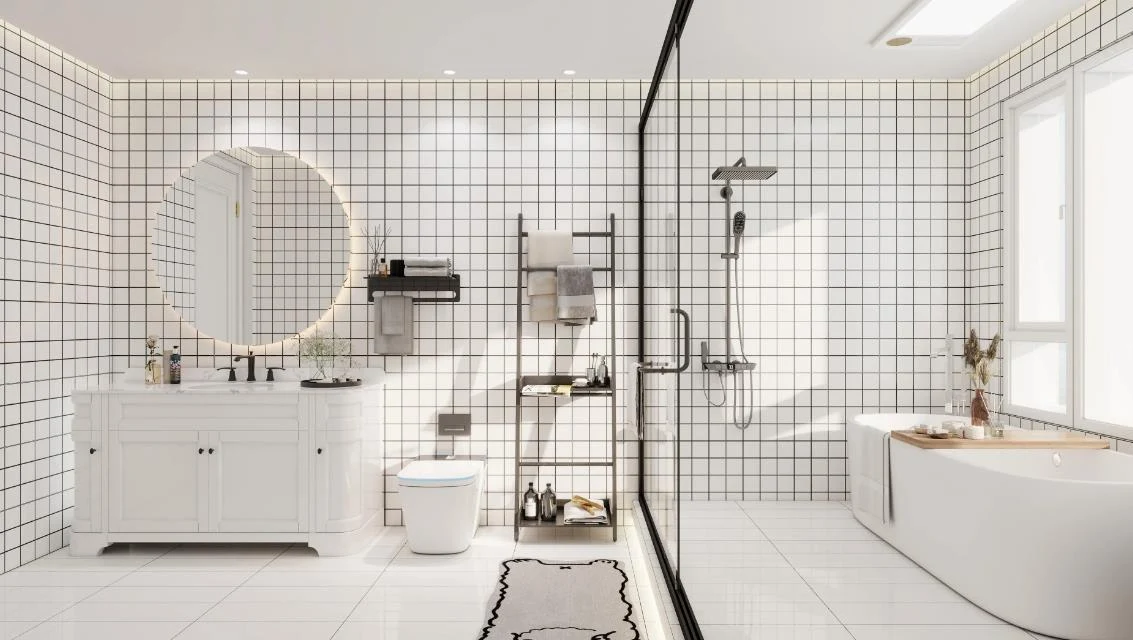
With hexagons as the basic unit, the collage combination is unique and full of geometric beauty. It suits a striking bathroom vision. Whether used on the floor or as an accent wall, it conforms to bathroom wall tiles design trends that prioritize design inspiration and personality.
7. Wood Grain Tiles
Simulate the texture of solid wood, retaining the natural texture of wood, and having the moisture-proof and wear-resistant properties of tiles. Suitable for creating a warm and natural atmosphere in the bathroom, often used on the floor or partial wall, an ideal choice to replace real wood flooring.
8. Cement Tile
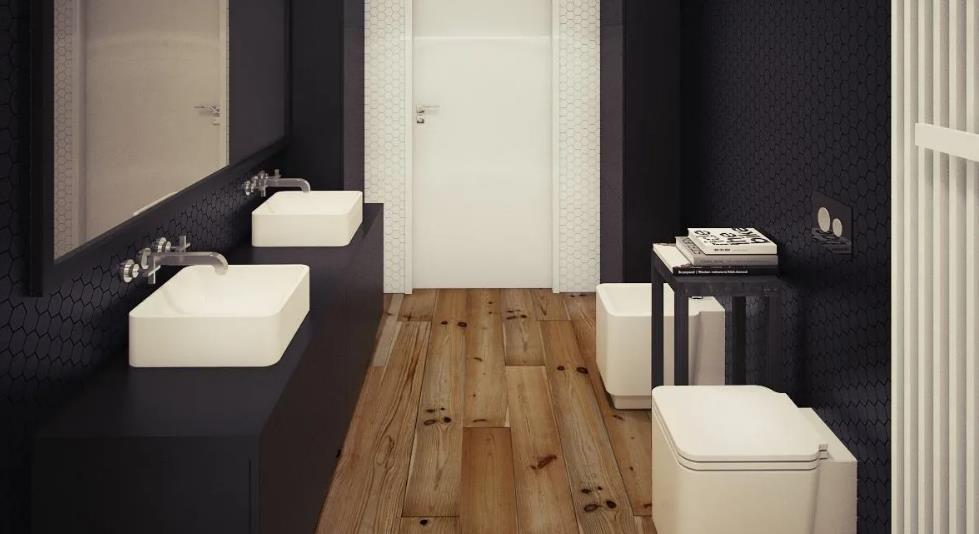
The surface has a cement texture, suitable for modern and industrial style bathrooms. The color is mainly gray and white, simple and low-key. The material is wear-resistant and durable, often used on the floor or shower area, emphasizing the "cold tone" aesthetics, but with wood color or green plants to balance the visual temperature.
9. Imitation Stone Tiles
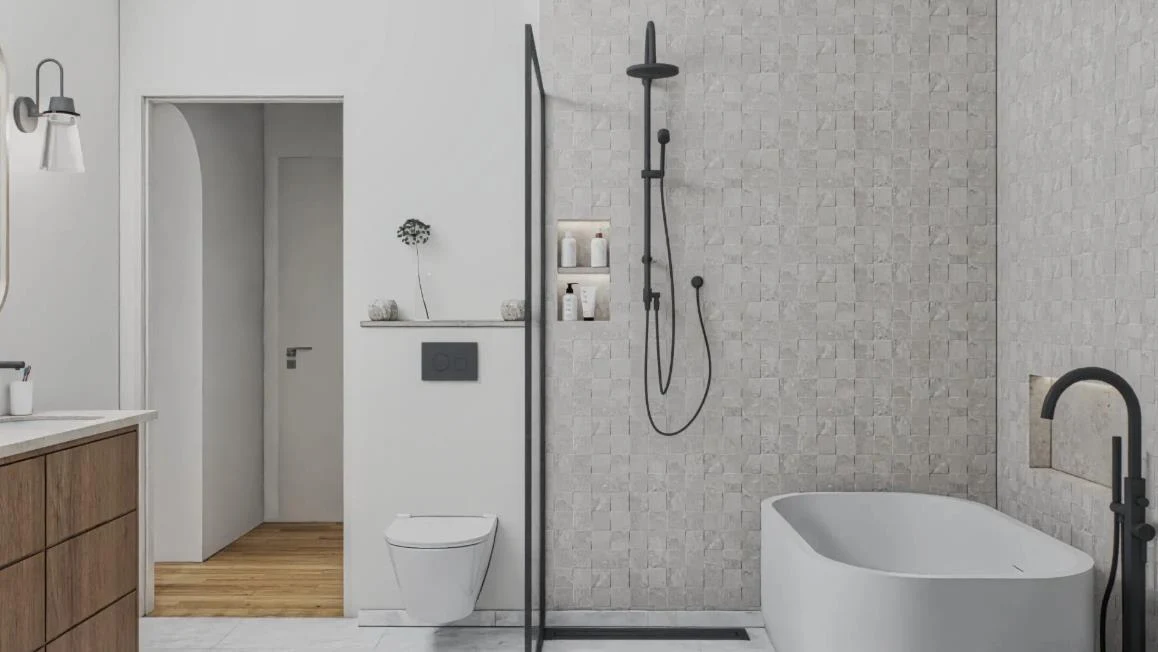
Imitate the texture and color of natural stones such as marble and granite, but are lighter, moisture-proof and easy to clean. Suitable for high-end bathroom wall tiles design, it is a combination of luxury and practicality, and also enhances the texture of the space.
10. Full Body Tile
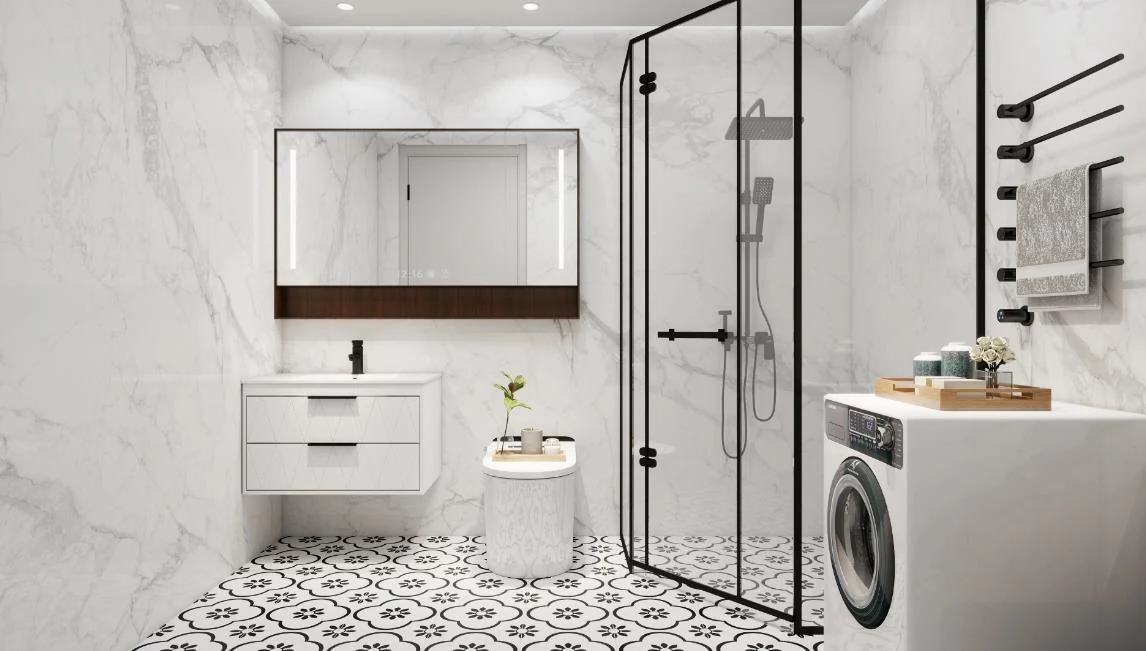
The brick body has the same color from inside to outside, high wear resistance, suitable for floor use, especially in areas with high traffic. Its surface has good anti-slip properties and long service life. It is a very practical type of tile, but its decorativeness is relatively limited.
11. Microcrystalline Stone Tile
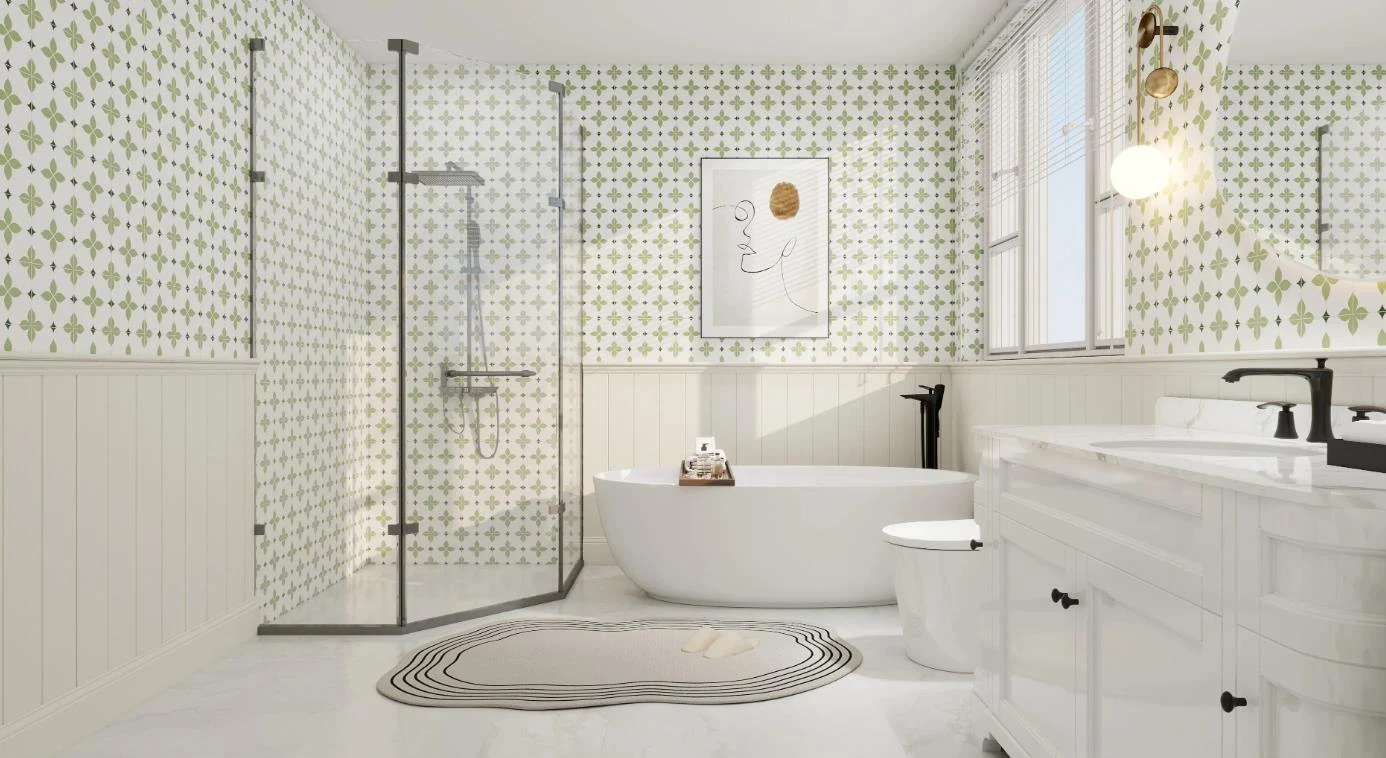
The surface is made of glass microcrystalline material, with a texture close to natural stone, high brightness and transparency. Suitable for creating a gorgeous, high-gloss bathroom space, but the price is high and the construction process is strict, so you need to carefully choose the non-slip version.
12. Bright Glazed Tile
The surface is bright and smooth, with a mirror effect, which can effectively improve the brightness of the space. Suitable for small areas or bathroom walls with insufficient light. However, when used on wet floors, you need to pay attention to the non-slip performance. It is not recommended to use it in bathroom shower designs tile.
13. Water Ripple Tile
The surface has an undulating ripple texture, which is visually dynamic and layered. It is suitable for creating artistic or marine-style bathroom wall tiles design. It is usually a bright glazed tile with a certain reflective effect, emphasizing the visual three-dimensional sense. Small bathroom tiles design usually uses this kind of tiles.
14. Imitation Metal Tile
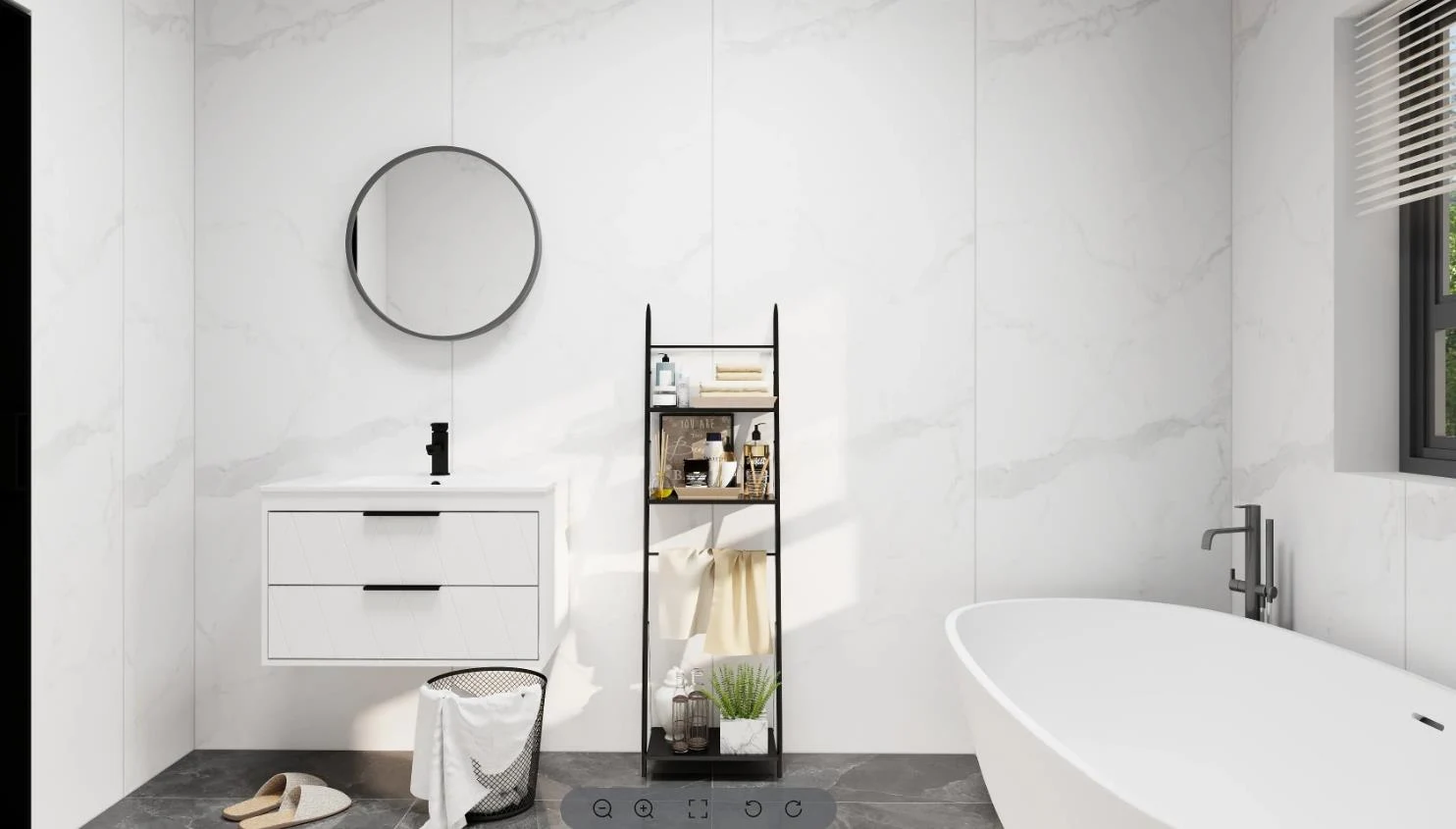
The surface has a metal brushed or rusty effect, and the tones are mostly dark gray, copper, and rust. Suitable for creating a personalized industrial style or futuristic bathroom, often used for local wall decoration or background wall design, with a strong sense of design.
15. Porcelain Floor Tiles
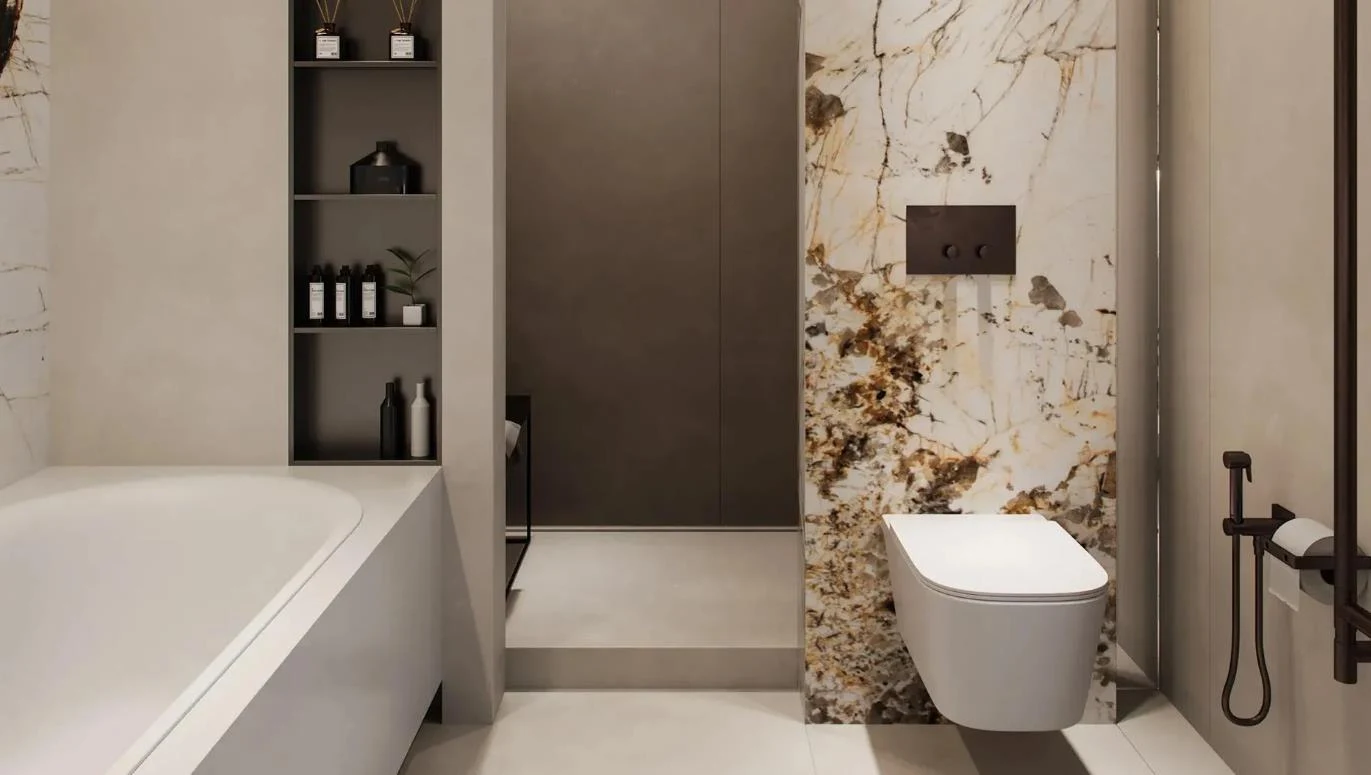
High density, low water absorption, high strength and not easy to deform, it is an ideal choice for bathroom floor tiles design. The surface can be made into a variety of textures and anti-slip treatment, which is a basic type of tile that takes into account both practicality and decoration.
16. Metal Glaze Tiles
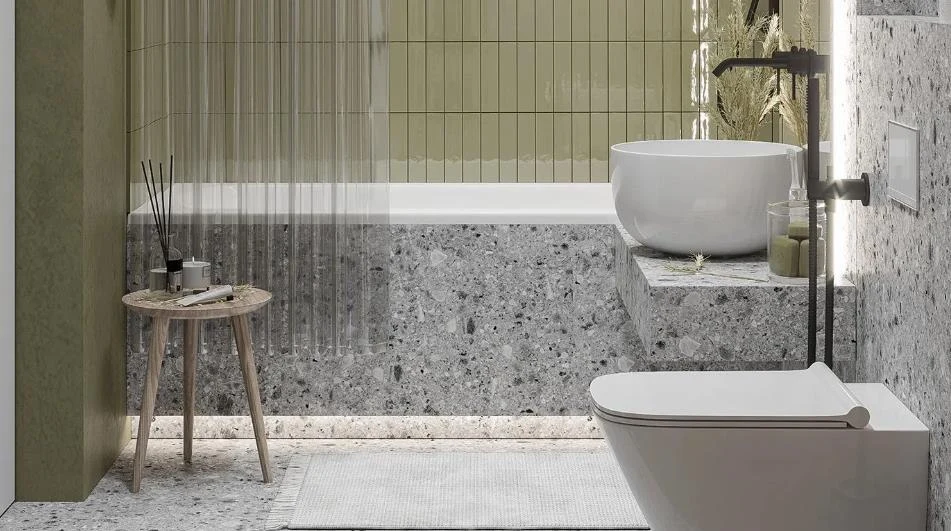
Metallic granular glaze is added to the surface to present a pearlescent or metallic luster effect. Suitable for small-area wall embellishment, such as around mirrors, bathroom design of background walls and other areas, highlighting the sense of luxury and modernity.
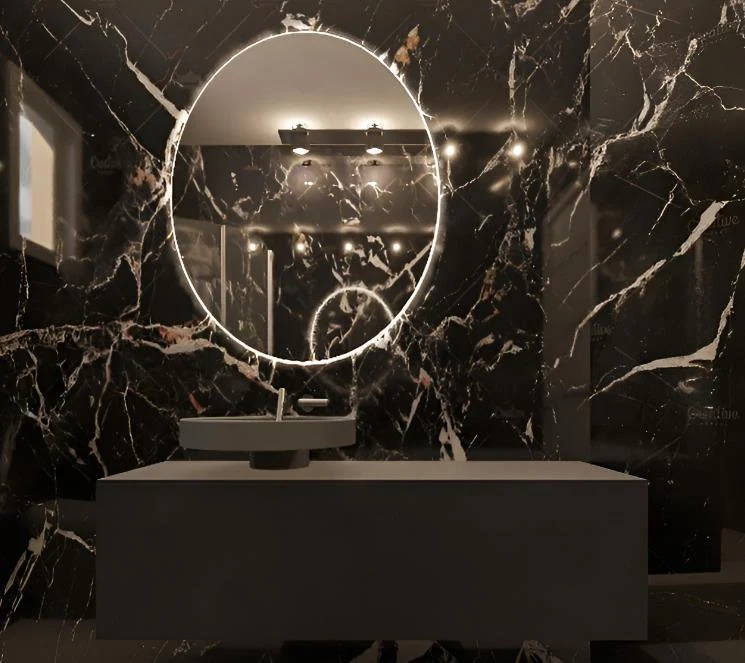
17. 3D Three-Dimensional Tiles
The surface is uneven and the shape is strong. It can create rich light and shadow changes. Suitable for local wall decoration or art background wall, with strong visual impact. But attention should be paid to cleaning and maintenance, and it is not recommended to use it on a large area.
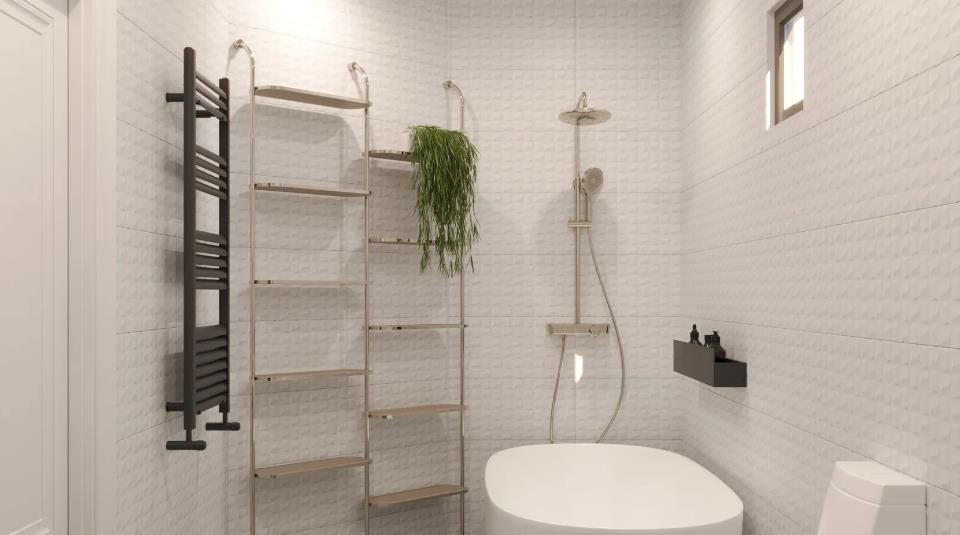
18. Imitation Cloth Texture Tiles
Simulate the texture of cloth, such as linen, linen, etc., with a delicate and warm touch, suitable for creating a soft and warm bathroom atmosphere. Mostly used for wall decoration, taking into account both texture and beauty, suitable for natural or Japanese minimalist style.
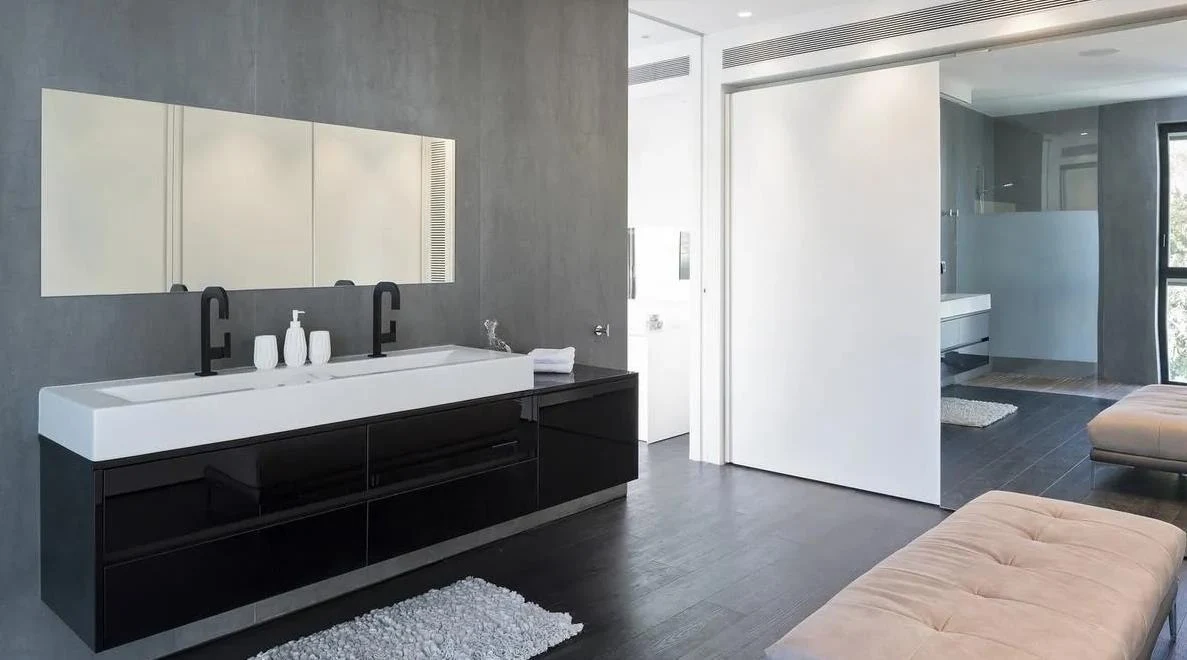
19. Quartz Tile
A composite material fired at high temperature, with extremely high hardness, extremely low water absorption, and particularly wear-resistant and scratch-resistant. Mostly used for floors, especially suitable for family bathrooms with high requirements for anti-slip and durability, it is the first choice for practicality.
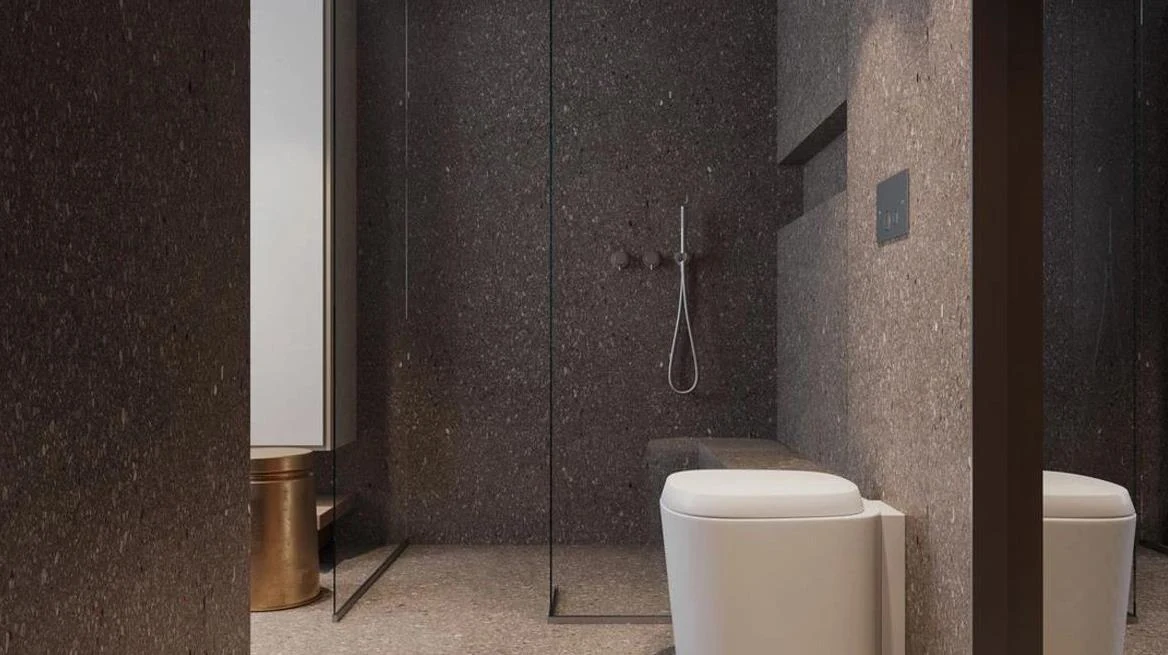
20. Handmade Tiles
Handmade by craftsmen, each piece is slightly different, with unique texture and personality. Suitable for creating artistic and personalized bathroom spaces, such as Mediterranean style and Bohemian style. The price is relatively high, suitable for local decoration or feature walls.
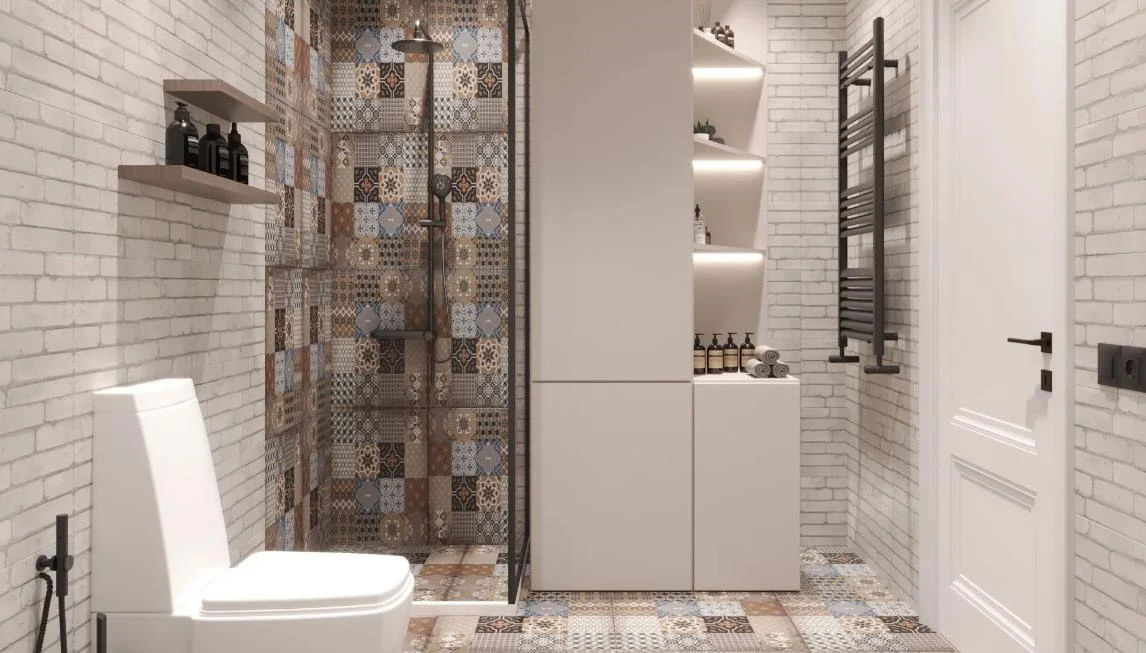
Bathroom shower designs tile is very important, not only because it is directly related to safety, practicality and cleaning convenience, but also because it determines the visual beauty and comfortable atmosphere of the entire bathroom space. A reasonable and detailed bathroom shower designs tile can make bathing a truly relaxing thing, while improper design may lead to problems such as slipping risks, difficulty in cleaning, and visual oppression. Therefore, the following is a selection recommendation specifically for bathroom shower designs tile.
1. Choose The Right Tile Specifications and Sizes
- bathroom floor tiles design. It is recommended to choose small-sized tiles below 30x30cm, which is conducive to slope drainage and has better anti-slip properties.
- bathroom wall tiles design. You can choose medium and large sizes (such as 30x60cm or 60x120cm) to reduce gaps and have a stronger overall feel.
2. Pay Attention to Anti-slip and Water Absorption Rate
Floor tiles must choose products with anti-slip surface treatment (such as matte, brushed or concave and convex texture). The water absorption rate is preferably less than 0.5%, which can prevent mold growth and discoloration of the brick body.
3. Color Matching Suggestions
small bathroom tiles designIt is recommended to choose light-colored tiles (white, beige, light gray, etc.) to enhance the brightness of the space; if the space is large, dark or color-matching tiles can be used to create a sense of hierarchy and design; bathroom floor tiles designcan choose a color slightly darker than the wall to enhance the sense of stability.
4. Use Collage and Modeling Design to Enhance Beauty
- Use hexagonal tiles, mosaics or mixed paving methods to increase the sense of art;
- Differentiating the wall and floor colors or adding waistline tiles can weaken the sense of closure;
- Using the same material with different patterns can maintain overall unity without losing variety.
5. Detailed Design of Joints
The gap should be controlled at 1.5-2.5mm, which is both impermeable and easy to clean; use an anti-mildew caulking agent to seal the seams, which can not only enhance the aesthetics but also prevent blackening and mold.
6. Matching Glass Partitions and Drainage System Design
- The slope of the tiles needs to be matched with the floor drain design, and the recommended slope is controlled at 1-2%;
- Matching with frameless glass partitions can make the tile paving effect more complete and more visually extensible.
Conclusion
While the footprint of this room may be small, the comfort it provides is immense. A curated selection of bathroom tile does more than just elevate the aesthetic; it makes daily rituals feel effortless. You might gravitate toward matte black fixtures, natural wood accents, or the warm glow of sconces. In every case, the right tile has the power to add warmth and to harness natural light for any guest bathroom or primary bathroom.
We hope this guide has supplied you with plenty of bathroom decor ideas and practical knowledge. From the main bathroom to the upstairs bathroom, let these bathroom design ideas inform and inspire your next bathroom remodel. For more design inspiration, you are welcome to explore the EClife platform, where interior designers share their work across every possible design style.
Bathroom Tiles Design FAQs
1. How should bathrooms be tiled?
A "safety first, beauty second" approach works best. During bathroom floor tiles design work, you must account for a one- to two-percent slope to prevent water pooling. Bathroom walls are tiled from the bottom up. Every joint needs treatment with anti-mildew caulk, a step that preserves the fresh bathroom feel and protects your bathroom features.
2. Do walls and floors need different tiles?
Yes. Bathroom floor tiles design calls for stronger slip resistance and wear tolerance, which usually means matte finishes or smaller formats. Bathroom wall tiles design works well with glossy, easy-clean surfaces. By making this distinction, you help the space feel larger and more secure, even in a tiny bathroom.
3. What tiles are best for small bathrooms?
Small bathroom tiles design works best with light, reflective surfaces such as white or beige glazed finishes. Large-format(such as 60×120cm) tiles on bathroom walls cut down on visual fragmentation, and this helps the space feel larger. A well-chosen bath mat and a well-positioned mirror will enhance any available natural light. In a small powder room, a bold wallpaper on one wall can pair with simple floor tiles to create a stylish bathroom that feels spacious rather than cluttered.